
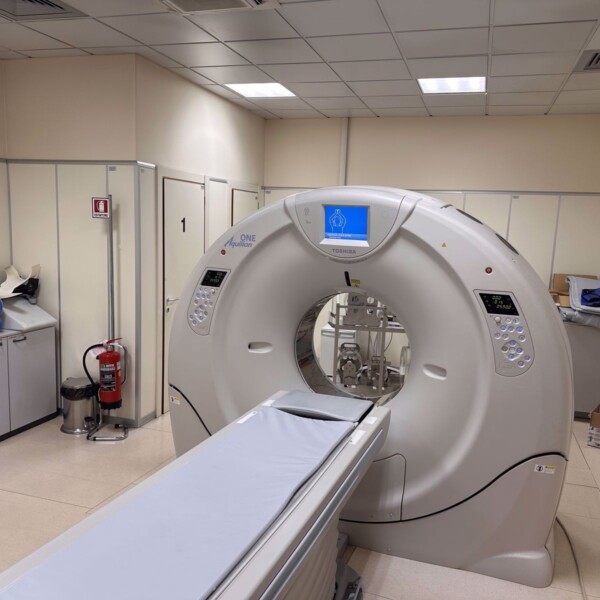
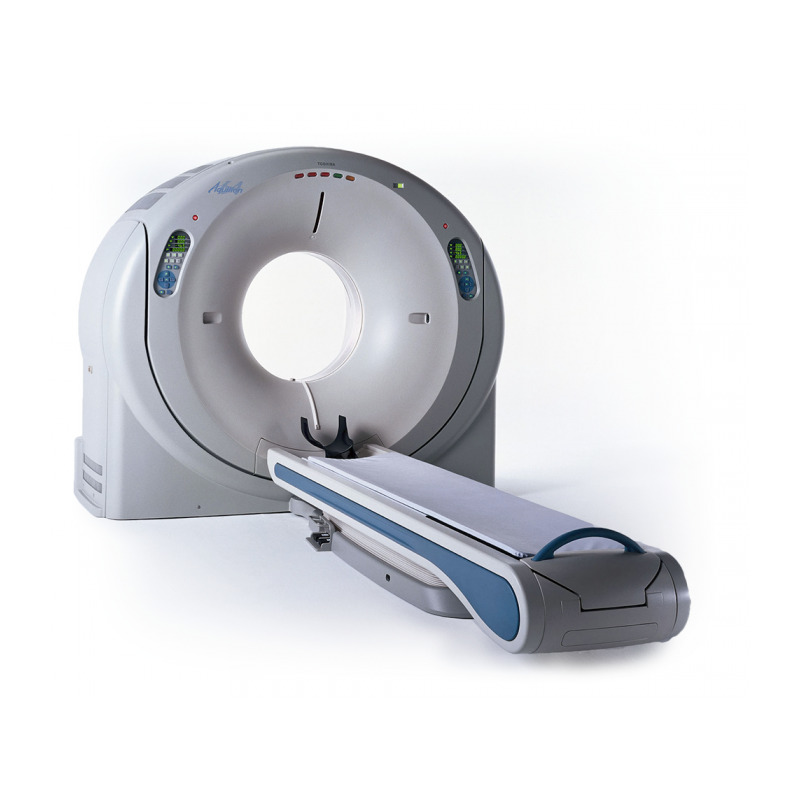
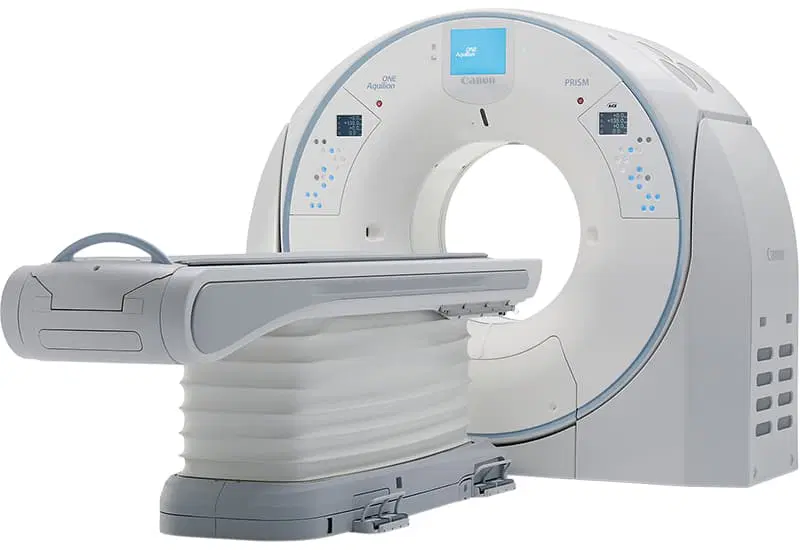
Toshiba aquilion one | Canon aquilion one | 100% Best Quality.
$210,000.00
The Toshiba aquilion one | Canon aquilion one CT machine was the first CT scanner to enable the acquisition of entire structures with one volume scan. The refurbished Toshiba Aquilion ONE CT scanner’s dynamic volumetric acquisition protocols can also review joint structures and organs over multiple rotations in 3D, showing real-time dynamic movement. An entire organ can be captured at one time, resulting in ultrafast scan times, greatly increased patient comfort and dramatic radiation dose reduction.
Description
Overview of Toshiba aquilion one | Canon aquilion one
The Toshiba aquilion one | Canon aquilion onerepresents a significant advancement in computed tomography (CT) technology, offering healthcare professionals a powerful tool for precise imaging and enhanced patient care. With its innovative features and capabilities, this cutting-edge system has transformed the way clinicians diagnose and treat a wide range of conditions.
From its exceptional imaging quality to its low radiation dose technology, the Aquilion One stands out in a competitive market, providing unique benefits across various clinical applications. This article explores the key features, technological innovations, and real-world impact of the Toshiba aquilion one | Canon aquilion one, while also considering its place among competitors and potential future developments in the field of CT imaging.
History and Development of Toshiba aquilion one | Canon aquilion one
The Toshiba aquilion one | Canon aquilion one has its roots in a collaboration that began in the late 2000s, merging cutting-edge technology from both companies to redefine CT imaging. The first model launched in 2011 promised to bring a new level of accuracy and efficiency to diagnostic imaging. Over the years, the system has seen several iterative enhancements, focusing on speed and radiation dose reduction while maintaining high image quality. In a world where every second counts, the Toshiba aquilion one | Canon aquilion one is like that overachieving student who finishes their homework early and still gets an A+.
Market Position of Toshiba aquilion one | Canon aquilion one
Positioned as a premium product in the diagnostic imaging market, the Canon-Toshiba Aquilion One stands out for its advanced features and patient-friendly design. Competing with heavyweights like Siemens and GE, it has carved a niche for itself by catering specifically to hospitals looking for both reliability and cutting-edge technology. Essentially, it’s the sleek sports car in a parking lot full of sedans—slightly pricier but worth every penny when you need that extra performance.
Key Features and Specifications of Toshiba aquilion one | Canon aquilion one
Imaging Capabilities
The Toshiba aquilion one | Canon aquilion one boasts impressive imaging capabilities, including a 320-slice detector that captures images in mere seconds, making routine scans feel like a breeze. With its ability to produce high-resolution images and 3D reconstructions, it’s like having a personal photographer in the CT room, making even internal organs look their best. Plus, the system’s low-dose technologies ensure that patients receive the minimum necessary radiation, which is always a top priority.
System Design and Configuration
Designed with both efficiency and ease of use in mind, the Aquilion One features a compact design that optimizes space in busy radiology departments. Its modular configuration allows for flexible installation options, meaning it can fit into even the quirkiest of layouts. Plus, with a gantry that supports larger patients without compromising comfort, it’s pretty much the friendliest bouncer you could ask for at the imaging club.
Software and User Interface
Navigating the Aquilion One’s software is as easy as pie—if pie were a complex, multifaceted imaging program. The intuitive user interface features touch-screen capabilities and streamlined workflows, making it user-friendly for radiologists and technicians alike. With customizable options and advanced imaging applications, it helps users to focus on what really matters—getting accurate readings and making patients smile instead of scratching their heads over complicated menus.
Technological Innovations in Imaging
Advanced Detector Technology
One of the standout features of the Aquilion One is its advanced detector technology that enhances image quality while significantly reducing noise. It’s like upgrading from a fuzzy old TV to a cutting-edge 4K model—everything becomes sharper and more detailed! This technology not only facilitates better diagnosis but does so with speed and efficiency that would make even the fastest superhero look slow.
Real-time 3D Imaging
Real-time 3D imaging is another revolutionary feature that sets the Aquilion One apart from the competition. It allows healthcare providers to visualize complex anatomical structures as they’re being scanned, offering a virtual reality-like experience. Who needs VR gaming when you can explore the human body in real-time? This capability is invaluable, especially during procedures that require immediate decision-making.
Low Dose Radiation Techniques
In a world increasingly aware of health risks, the Aquilion One excels with its low-dose radiation techniques that keep exposure to a minimum without sacrificing image quality. It’s like getting the best of both worlds—top-notch images and peace of mind for patients and providers alike. With safety at the forefront, this system demonstrates a commitment to advancing technology while keeping everyone’s well-being in check.
Clinical Applications and Benefits
Oncology Imaging
When it comes to oncology imaging, the Aquilion One is a game changer. Its high-resolution imaging capabilities allow for precise tumor detection, staging, and monitoring during treatment. Think of it as a trusty sidekick for oncologists, providing them with the critical information they need to make life-saving decisions. The quicker and more accurately they can assess a patient’s condition, the better.
Cardiac Imaging
For cardiac imaging, the Aquilion One does not play around. With its ability to obtain detailed images of the heart and vascular system in just seconds, it aids in the timely diagnosis of conditions like coronary artery disease. Cardiologists can rejoice as they obtain images that leave little to the imagination—after all, knowing what’s going on with the ticker is crucial to keeping patients healthy and happy.
Pediatric Applications
Pediatric applications are another sweet spot for the Aquilion One. With specialized protocols designed for children, this advanced imaging system minimizes radiation exposure and ensures comfort for even the tiniest of patients. It’s like having a superhero suit tailored just for kids—ensuring they receive the best care without the scary bits. After all, nobody wants their little ones to feel like they’re going into a sci-fi movie; they should feel safe and supported.
Comparison with Competitors
Market Leaders in CT Technology
When it comes to CT technology, the battlefield is crowded with heavyweights like Siemens, GE Healthcare, and Philips. Each brand has its own set of strengths and quirks, but the Canon-Toshiba Aquilion One stands out with its one-of-a-kind 320-slice technology, boasting capabilities that allow it to capture detailed images in one rapid rotation. While competitors might charm with faster models or sleeker interfaces, the Aquilion One wins points for versatility and cutting-edge imaging, making it a top contender in the medical imaging ring.
Feature Comparison and Analysis
Let’s break down the features like a high school math teacher on the last day of school. The Aquilion One offers remarkable temporal resolution, making it ideal for cardiac imaging—something that some competitors lag behind on. While Siemens’s SOMATOM Force has dual-source technology and GE’s Revolution CT has a snazzy touchscreen, the Aquilion’s comprehensive 3D imaging transcends mere “good enough.” In head-to-head comparisons, its ability to capture high-quality images with lower doses of radiation often gives it the edge, proving that sometimes being “the best” isn’t all about speed, but about sophistication too.
Cost-Effectiveness
Pricing in the CT world can be as convoluted as IKEA assembly instructions. The Aquilion One is certainly an investment, but hospitals need to consider its overall value. With reduced scanning times and improved patient throughput, the cost-effectiveness may very well justify its price tag.
Additionally, lower radiation doses translate to potential savings on patient care, making it a choice that might have accountants nodding in approval. Ultimately, for facilities looking to optimize both performance and budget, the Aquilion One provides a strong case for itself.
User Experience and Feedback
Surgeon and Radiologist Insights
The surgeons and radiologists have had their say, and the verdict is largely positive. Users praise the Aquilion One for its clear imaging and minimal motion artifacts, which make diagnosing conditions less of a guessing game. Some have noted that its sophisticated imaging capabilities allow for quicker diagnosis, which is a big win when every second counts. However, there’s still the occasional grumble about the learning curve, especially for those transitioning from other systems.
User Training and Support
User training is crucial, and Canon-Toshiba seems to get it right more often than not. Hospitals report that their training support feels less like a dry corporate seminar and more like a helping hand from a friend. Hands-on training sessions and robust resources mean staff members aren’t left to figure out the labyrinth of settings alone. The comprehensive support, including videos and extensive manuals, can make all the difference when it comes to feeling confident with the technology.
Common Challenges and Limitations
No tech is perfect, and the Aquilion One is no exception. Users occasionally point out a few hiccups, such as the system’s size—it’s not the most compact CT scanner out there. Space can be a premium in busy hospitals, making room for the Aquilion One a bit of a puzzle. Additionally, while its image quality is stellar, some have noted that software updates can occasionally lag behind expectations, leaving users yearning for a smoother experience.
Case Studies and Success Stories
Hospital Implementations
There are plenty of success stories swirling around the Aquilion One. Hospitals that have integrated this technology often report a significant uptick in diagnostic accuracy and patient throughput. One exemplary case involved a busy metropolitan hospital that managed to reduce patient wait times by 30% after incorporating the Aquilion One into their radiology department. It’s not just about the machine; it’s about how it’s utilized to enhance patient care.
Patient Outcomes
The real winners in this show are the patients. Several case studies highlight how the enhanced image quality has led to earlier and more accurate diagnoses, which, let’s face it, is the goal of any medical imaging technology. From identifying tumors that might have been missed by lesser scanners to improved surgical planning, the Aquilion One is making a tangible difference in patient outcomes, ensuring that everyone leaves with more than just a good story.
Long-term Usage Statistics
Long-term statistics speak volumes, and the Aquilion One has the metrics to back it up. Studies show that facilities employing this scanner achieve a notable reduction in repeat scans due to initial image quality, which can save both time and resources. User satisfaction scores remain high, with reports indicating consistent performance over years of usage. In the fast-paced world of healthcare, this kind of reliability is worth its weight in gold.
Future Developments and Trends in CT Imaging
Emerging Technologies
The future of CT imaging is looking brighter than a post-summer vacation glow. Emerging technologies, like photon counting detectors and advanced AI algorithms, promise to enhance image quality further while reducing scan times. With companies like Canon-Toshiba at the helm, we can expect innovations that not only make imaging faster but also smarter, getting us closer to that elusive “one-scan-fits-all” dream.
Regulatory and Compliance Changes
Navigating the regulatory landscape can be like trying to read a map upside down while blindfolded. The CT space is no exception, as evolving regulatory requirements continue to shape the industry. With increased emphasis on patient safety and data privacy, those who embrace proactive compliance will likely thrive. Keeping pace with these changes will be critical for manufacturers like Canon-Toshiba as they strive to stay ahead of the curve.
The Future of AI in Imaging
Artificial Intelligence is not just a sci-fi buzzword; it’s rapidly becoming a reality in the imaging world. The Aquilion One is likely to integrate more AI tools for image analysis, enhancing diagnostic capabilities and allowing radiologists to focus on what really matters—patient care. Smart algorithms could soon assist in flagging potential issues, streamlining workflows, and ultimately making the impossible possible in diagnostics. Buckle up; the future is looking pretty high-tech!In conclusion, the Canon-Toshiba Aquilion One has established itself as a leader in the realm of computed tomography, offering remarkable imaging capabilities and numerous benefits for patient care.
Its advanced technology and versatility make it a valuable asset in various clinical settings, enhancing diagnostic accuracy and treatment outcomes. As the field of medical imaging continues to evolve, the Aquilion One is poised to adapt and integrate new innovations, ensuring it remains at the forefront of CT technology for years to come.
Frequently Asked Questions
What makes the Aquilion One different from other CT scanners?
The Aquilion One features advanced imaging technology that provides high-resolution images with a lower radiation dose, real-time 3D imaging capabilities, and a wide range of clinical applications, setting it apart from other CT scanners.
How does the Aquilion One improve patient safety?
The system incorporates low-dose radiation techniques and intelligent software designed to optimize imaging protocols, significantly reducing radiation exposure while maintaining diagnostic quality.
What types of clinical applications can the Aquilion One be used for?
The Aquilion One is versatile and can be utilized for various applications, including oncology imaging, cardiac assessments, pediatric studies, and emergency diagnostics.
Is training required to operate the Aquilion One effectively?
Yes, while the user interface is designed to be intuitive, training is essential to ensure that healthcare professionals can operate the system efficiently and maximize its capabilities for patient care.



Reviews
There are no reviews yet.